The Resurrection of a Marionette:
hand-crafted by Katdazzle
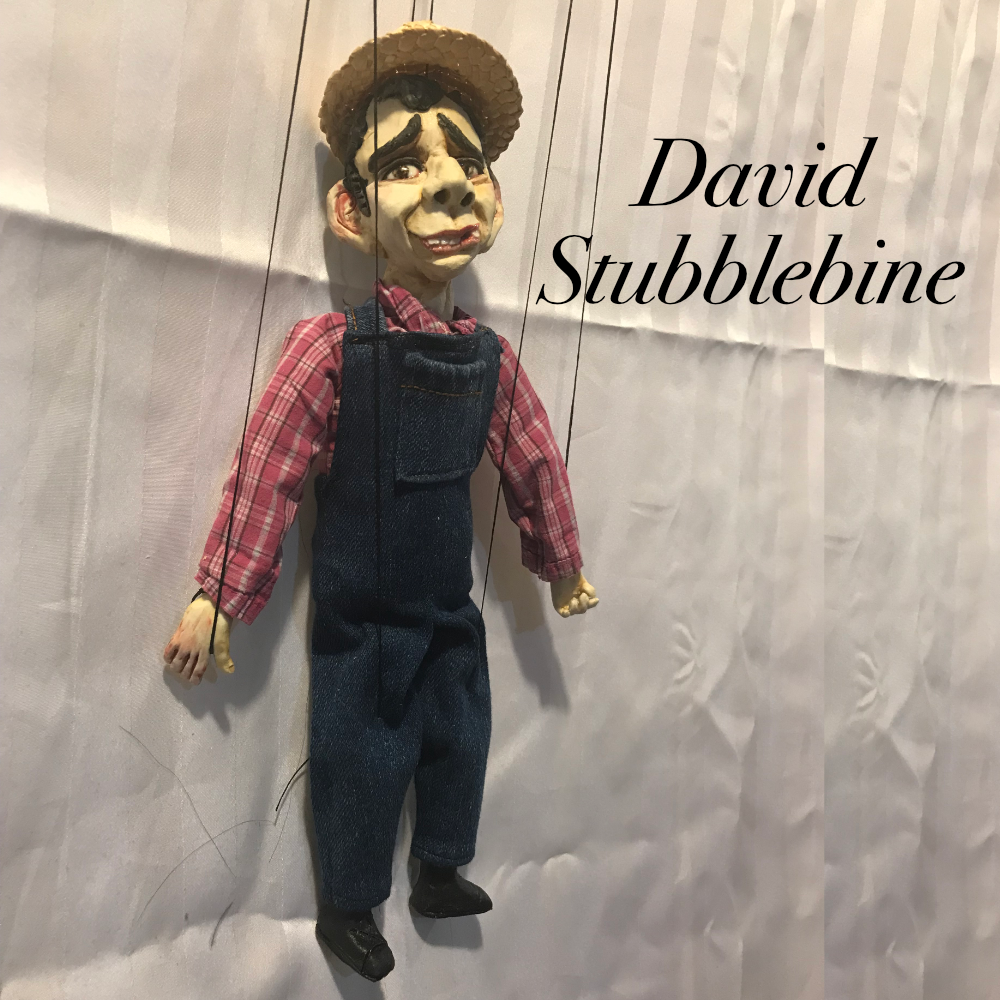
The Original Porcelain 8” marionette
Future Hand-carved large 15” marionette
Born porcelain. Reborn in wood.
The True Story of David Stubblebine (1788-1860):
a man who reshaped his life around radical beliefs.
His History
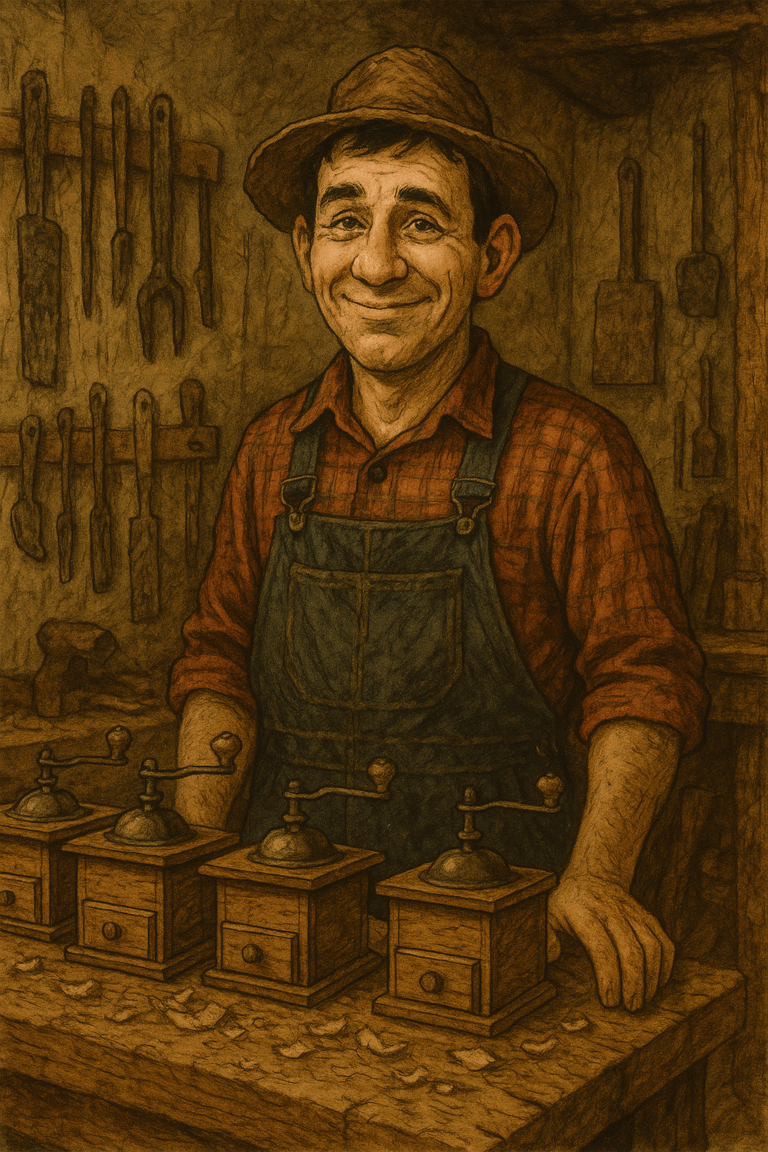
Farmer, mason, coffee-mill maker, and Battle-Axe sect member
David Stubblebine was born in 1788 in what became North Coventry Township, Chester County, Pennsylvania. A son of Sebastian Stubblebine and Hannah (Smith) Stubblebine, he belonged to a large local family that included brothers Jacob, John, and William and a sister Hannah. He was buried in Shenkel Cemetery in North Coventry, with his tombstone giving dates consistent with a birth in 1788 and death in March 1860.
Marriage and Household On 12 September 1813, David married Catharine Bachman, daughter of Louis and Rebecca Bachman, at St. Mary’s Protestant Episcopal Church in Warwick, Chester County. They had six children and initially lived together in Coventry Township.
Across multiple Pennsylvania Septennial Censuses, David appears first as a mason (1814, 1821, 1828) and later as a farmer (1835, 1856) in Coventry / West Coventry Township. He lived and worked along Cold Springs Road, where he and his brother Daniel operated a small farm and a two-story log workshop near a spring and pond.
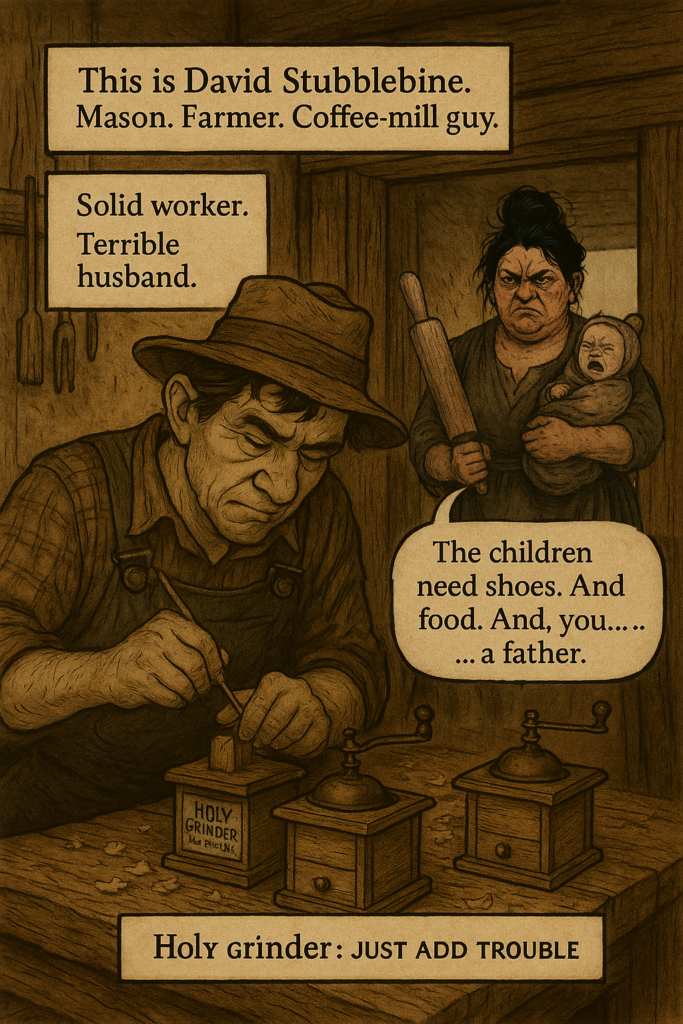
Local accounts describe the brothers’ specialty: small hand coffee mills. David built the wooden components, Daniel forged the iron, and the finished mills were taken to Philadelphia to sell. The property included a carpenter’s shop in the log house, a smithy in the woods, and a springhouse topped by a room used by Hannah Williamson.
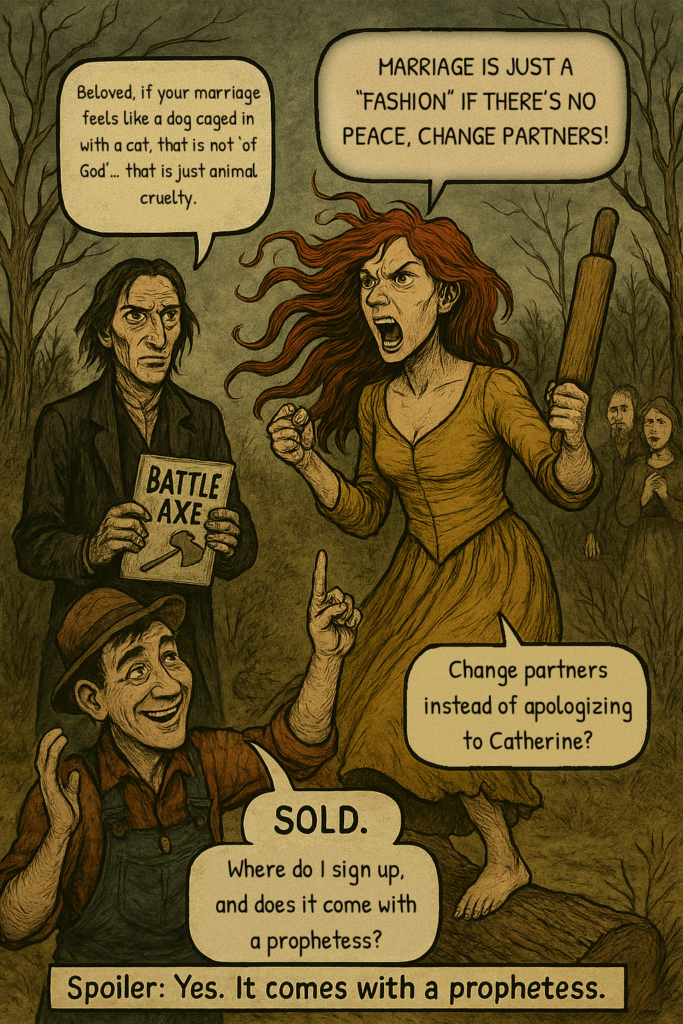
The Battle-Axes and Hannah Williamson Around 1840, David, Daniel, and their brother William became deeply involved with the Battle Axes of the Lord, a radical religious movement led by Theophilus Ransom Gates. Gates preached communal property and rejected lifelong marriage, arguing that couples should remain together only while they lived “in mutual good will, peace and comfort.” The movement encouraged partner changes, opposed conventional church authority, and tolerated nudity and dramatic public demonstrations.
After Gates’s death in 1846, Hannah Williamson emerged as the central figure among the “saints.” She preached and prophesied throughout what became known as “Free Love Valley” and formed a close partnership with the Stubblebine brothers. In the long log house near the Cold Springs, David and Daniel lived and worked with Hannah, whose room above the springhouse became part of later legends surrounding the sect.
By the 1840s, their marriage had broken down. Catharine left David and lived with her brother in the valley, while court records show repeated efforts to force David to support his wife and family. By 1850, the U.S. Census lists David, age 56, a farmer in North Coventry, sharing his household with Hannah Williams (understood to be Hannah Williamson), while his brother Daniel lived alone next door.
Legal Troubles and Imprisonment David’s commitment to the Battle-Axe ideals had serious legal and financial consequences:
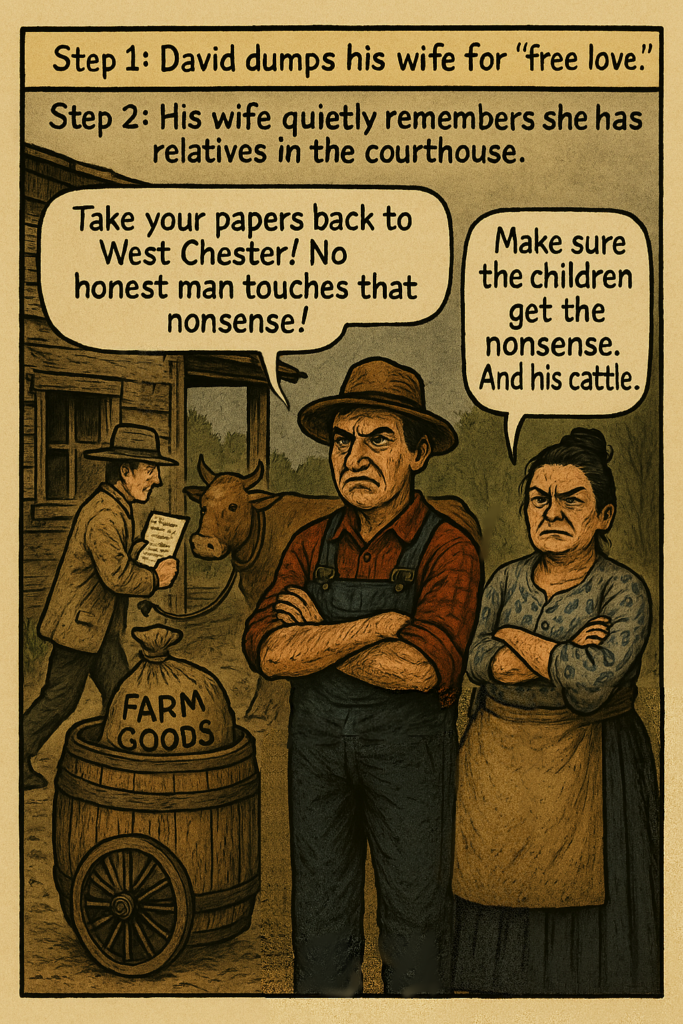
In November–December 1842, Chester County authorities seized about $1,000 in cash, cattle, and farm goods from David “for the support of his family,” after he refused to cooperate with court proceedings involving Catharine’s maintenance.
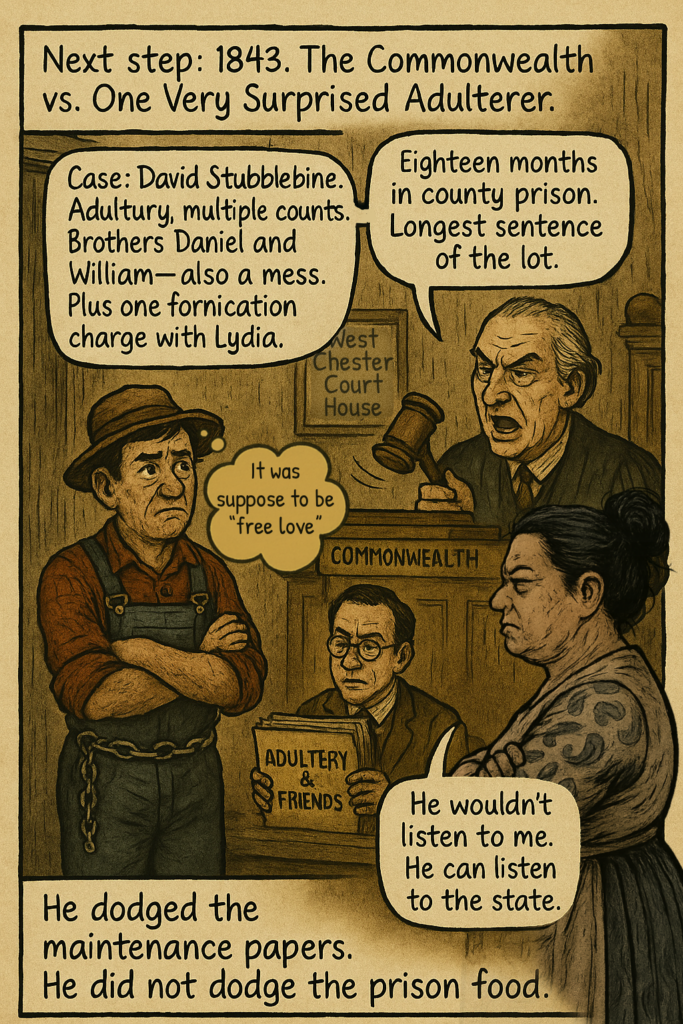
In February 1843, Quarter Sessions indictments named David for adultery, with related charges against his brothers and a linked fornication charge involving Lydia Williamson.
The Chester County Prison Docket (1840–1857) records David, age 55, committed in 1843 for adultery. He was convicted on multiple counts and received the longest sentence among the Battle-Axe defendants: 18 months in the county prison.
These cases formalized what was already happening in practice: David had left his legal wife for the Battle-Axe community, and the state intervened to enforce both moral law and financial responsibility.
Final Years and Death. After his release, David appears again as a farmer in North Coventry, still associated with Hannah Williamson. The 1860 U.S. Census Mortality Schedule records his death in March 1860, at about 70, from “dropsy fever” and old age, and notes that he was married at the time. He was interred at Shenkel Cemetery, near others connected to the sect and to the valley’s history.
Historical Significance. David Stubblebine’s life sits at the meeting point of ordinary rural labor and extraordinary religious experiment. He was at once a mason, farmer, and craftsman of coffee mills on Cold Springs Road, and a committed member of a movement that openly challenged marriage, sexuality, and church authority in 19th-century Chester County.
Through court dockets, tax lists, census entries, and sect narratives, David emerges as a key figure in the story of Free Love Valley—a man who reshaped his life around radical beliefs and, in doing so, drew the sustained attention of his neighbors, the courts, and history itself.
Meet Cory Roman – The Voice Actor Behind David Stubblebine
Meet Cory, the talented voice behind David Stubblebine and many, many weird and wonderful voices. By day, he kills bugs, and by night he amazes audiences with his wide range of voices..